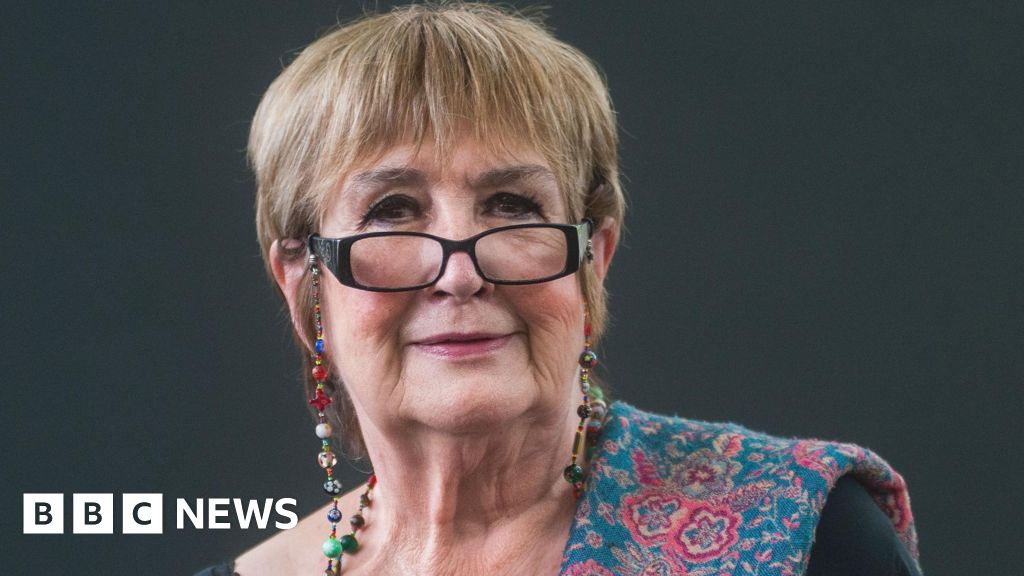
Dame Jenni Murray Dies Aged 75: The Voice That Shaped Woman’s Hour for a Generation
Dame Jenni Murray, the longest-serving presenter in the history of BBC Radio 4’s Woman’s Hour, died on 12 March 2026. She was 75. She hosted the programme from 1987 to 2020 — 33 years of interviews, investigations, and conversations that millions of listeners made part of their daily lives.
A Morning Ritual for Millions
Every weekday morning, for over three decades, women across Britain switched on the radio and heard the same steady, warm, unafraid voice. Dame Jenni Murray was not simply a radio host — she became a fixture of public life, someone who could hold politicians accountable one moment and sit with a grieving listener the next, and make both feel equally important.
That is not a common skill. It is, in truth, a rare one. And for 33 years, she made it sound effortless.
From Barnsley to Broadcasting Icon
A Career Built From the Ground Up
Murray was born in Barnsley, South Yorkshire, on 12 May 1950. She earned a degree in French and Drama from the University of Hull and joined BBC Radio Bristol in 1973.
She did not arrive at Woman’s Hour overnight. Before taking the presenting chair, she honed her skills on Newsnight on BBC Two and Radio 4’s Today programme. By the time she took over from Sue MacGregor in 1987, she was already a seasoned broadcaster.
What followed was 33 years of history.
The Interviews That Defined an Era
She Sat With the Powerful — and the Grieving
The breadth of Dame Jenni’s guest list tells you everything about the scale of her ambition for the programme. She interviewed Anna Politkovskaya, Kate McCann, Margaret Atwood, Toni Morrison, Wangari Maathai, Benazir Bhutto, Dame Judi Dench, Saoirse Ronan, and Joan Baez — who sang Diamonds and Rust in the studio especially for her.
She also pressed the powerful when they needed pressing. She memorably confronted Margaret Thatcher over childcare policies and questioned Hillary Clinton on forgiving her husband Bill’s infidelity.
Her talent management firm Knight Ayton described her as a “true professional and a pioneer” who interviewed every Prime Minister of the last 30 years.
That range — from a folk singer performing live to a head of state under scrutiny — is what set her apart.
The Secret Behind the Interviews
Former programme editor Sally Feldman perhaps captured it best. She described Murray’s interviewing technique as almost hypnotic, noting that she “just didn’t have any fear at all about asking people things — and they always found themselves replying.”
That fearlessness was not aggression. It was trust, earned across decades of showing listeners she genuinely cared.
She Never Hid Her Own Story
Openness Was Part of the Job
Dame Jenni did not stay behind the microphone as a detached professional. She brought herself to the work — fully, publicly, and without apology.
In 2006, she made the decision to announce her breast cancer diagnosis live on air to her listeners. She underwent a mastectomy and chemotherapy before returning to Radio 4.
She later took part in ITV’s The Real Full Monty — her reason simple: to encourage more women to check for breast cancer.
She was equally candid about the menopause, hip surgery, and weight loss. Each disclosure was deliberate. Each one gave permission for her listeners to talk about things they had long kept quiet.
A Final Sign-Off That Said Everything
The broadcaster ended her final programme in October 2020 with Helen Reddy’s feminist anthem I Am Woman.
It was not a random choice. After 33 years of giving women a platform, a voice, and a space where their lives were treated as serious subjects — it was the only possible ending.
BBC Director General Tim Davie described her as “a broadcasting icon” who created “a safe space for her audience thanks to her warmth, intelligence and courage.”
Radio 4 Controller Mohit Bakaya said she “helped shape the national conversation with intelligence, rigour and a remarkable ability to connect with audiences.”
Her Honours — and What They Represented
She was awarded an OBE in 1999 and became a Dame in 2011 in recognition of her contribution to broadcasting.
These were formal recognitions of something her listeners already knew: that Woman’s Hour under Jenni Murray was not a niche programme. It was a national institution — and she had built it into one conversation at a time.
FAQ
Q: When did Dame Jenni Murray die?
A: Dame Jenni Murray died on 12 March 2026. She was 75 years old. Her family confirmed the news in a statement shared with the Daily Mail. The BBC announced her passing on 20 March 2026.
Q: How long did Jenni Murray present Woman’s Hour?
A: She presented Woman’s Hour for 33 years, from 1987 to 2020. That made her the longest-serving presenter in the programme’s history. She took over from Sue MacGregor and stepped down in October 2020. No presenter before or since has held the role for as long.
Q: What made Jenni Murray’s interviewing style different?
A: Her former programme editor described her technique as almost hypnotic — she had no fear of asking difficult questions, and guests always found themselves answering honestly. She combined warmth with rigour in a way that felt natural. She was equally at ease with world leaders and ordinary listeners in personal distress. That balance is what made her irreplaceable.
Q: What did Jenni Murray do after leaving Woman’s Hour?
A: After leaving in 2020, she remained active in broadcasting. She appeared on ITV’s The Real Full Monty to encourage women to check for breast cancer. She also returned to the BBC to present Jenni Murray’s Women Composers for Radio 3. She continued writing and gave interviews until close to her death.
Q: Why did Jenni Murray end her final Woman’s Hour with I Am Woman?
A: She chose Helen Reddy’s 1971 feminist anthem as her closing song — a deliberate statement after 33 years of championing women’s voices, lives, and experiences on national radio. It reflected both her personal values and the mission she had given the programme. It was widely described as the perfect send-off. The choice said more than any speech could have.
Q: What is Woman’s Hour and is it still going?
A: Woman’s Hour is a long-running daily programme on BBC Radio 4 dedicated to women’s voices and women’s lives. It has been broadcast since 1946. It continues today with a new presenting team. Dame Jenni’s 33-year tenure remains the defining chapter in its history.

Lewis Calvert Founder & Editor, BriefLedger
Lewis founded BriefLedger and has six years of experience covering film, TV, and entertainment news. He leads the site’s Movies and TV sections and runs the news desk — always with a straight-talking British take.