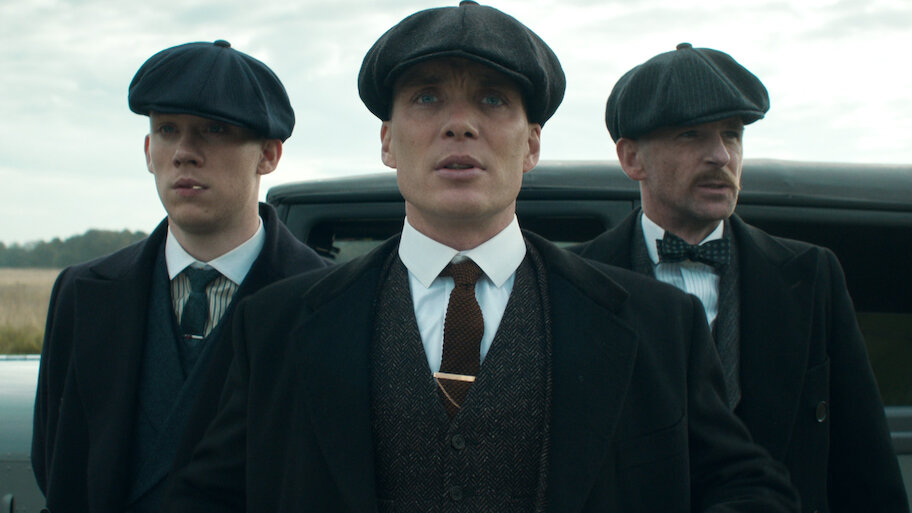
Peaky Blinders: The Immortal Man Is the Ending Tommy Shelby and Every Fan, Deserved
Tommy Shelby is back in his suit. And apparently, even Barry Keoghan was cheering.
After 13 years, six seasons, and a fandom that somehow includes both Snoop Dogg and A$AP Rocky, Peaky Blinders is getting its proper sendoff. Peaky Blinders: The Immortal Man hits Netflix on March 20, and creator Steven Knight says this is exactly how he always planned to end it.
The Ending Was Written Before the Show Even Began
Knight didn’t stumble into this conclusion. Speaking to Mashable’s Say More studio alongside Cillian Murphy and Barry Keoghan, he was unambiguous about his vision: “I always wanted to finish this part of the ‘Peaky’ story with a film in the Second World War.”
The arc was intentional from day one, a sweeping story that travels from the aftermath of World War I all the way into World War II, using the Shelby family to shine a light on England’s working class, a group Knight feels history has largely ignored. It’s a bold structural choice, and one that gives the finale a weight most TV wrap-ups never achieve.
Where We Find Tommy Shelby
When the film opens, Tommy has stepped back. He’s separated himself from the family, from the empire, from the life. Think of it as a man trying to outrun his own legend, and failing, gloriously.
Murphy, Knight, and Keoghan discussed what fans have been waiting for: the moment Tommy puts the suit back on. Murphy described the buildup with the precision of a storyteller who’s lived inside this character for over a decade: “It’s like drawing back the bow, and how long do you keep it taut before you let it go? And then we let it off, the audience loved it.”
Knight put it more simply: “He’s like Batman.”
Keoghan’s reaction? “Even I was cheering, and you were coming to get me.” When the guy playing your antagonist is rooting for you, you’ve nailed the scene.
A Fandom That Refuses to Stay Quiet
Here’s something that still surprises even Knight himself: Peaky Blinders built one of television’s most passionate fanbases almost entirely by word of mouth. As Mashable’s Proma Khosla once noted, everyone you meet has either never heard of the show — or is completely obsessed with it. There’s no middle ground.
That quiet cultural dominance eventually got loud. Knight recounted stories of Snoop Dogg and A$AP Rocky both tracking him down to express their love for the series. His encounter with A$AP Rocky escalated from a chance meeting to a Christmas dinner at Knight’s home. Not bad for a BBC period drama about Birmingham gangsters.
Why This Format — A Film — Was the Right Call
Ending a beloved series is one of television’s hardest challenges. Game of Thrones stumbled. Dexter stumbled twice (then course-corrected with New Blood). Knight chose a different path: step outside the episodic format entirely and let the story breathe in a feature film.
It’s a smart move. A film allows the narrative to feel like a proper conclusion rather than just another season finale stretched thin. It gives Murphy room to play the full arc of Tommy’s return without the pressure of cliffhangers or mid-season pacing. And it signals to the audience — this is different. This is the end.
What’s at Stake for Netflix
For Netflix, this is a marquee release. Peaky Blinders has been a reliable prestige title since the streamer picked up international distribution rights, and a film-length finale is exactly the kind of event content that drives subscription engagement. Expect watch parties. Expect Twitter to lose its mind.
The platform has been doubling down on finishing beloved stories properly — and The Immortal Man fits that strategy cleanly.
The Bottom Line
Peaky Blinders: The Immortal Man isn’t just fan service. It’s the completion of a story that was always heading somewhere specific, told by a creator who knew where he was going and actors who understood exactly what the moment demanded.
Tommy Shelby put the suit back on. The bow was drawn for 13 years.
On March 20, they let it go.

Lewis Calvert Founder & Editor, BriefLedger
Lewis founded BriefLedger and has six years of experience covering film, TV, and entertainment news. He leads the site’s Movies and TV sections and runs the news desk — always with a straight-talking British take.