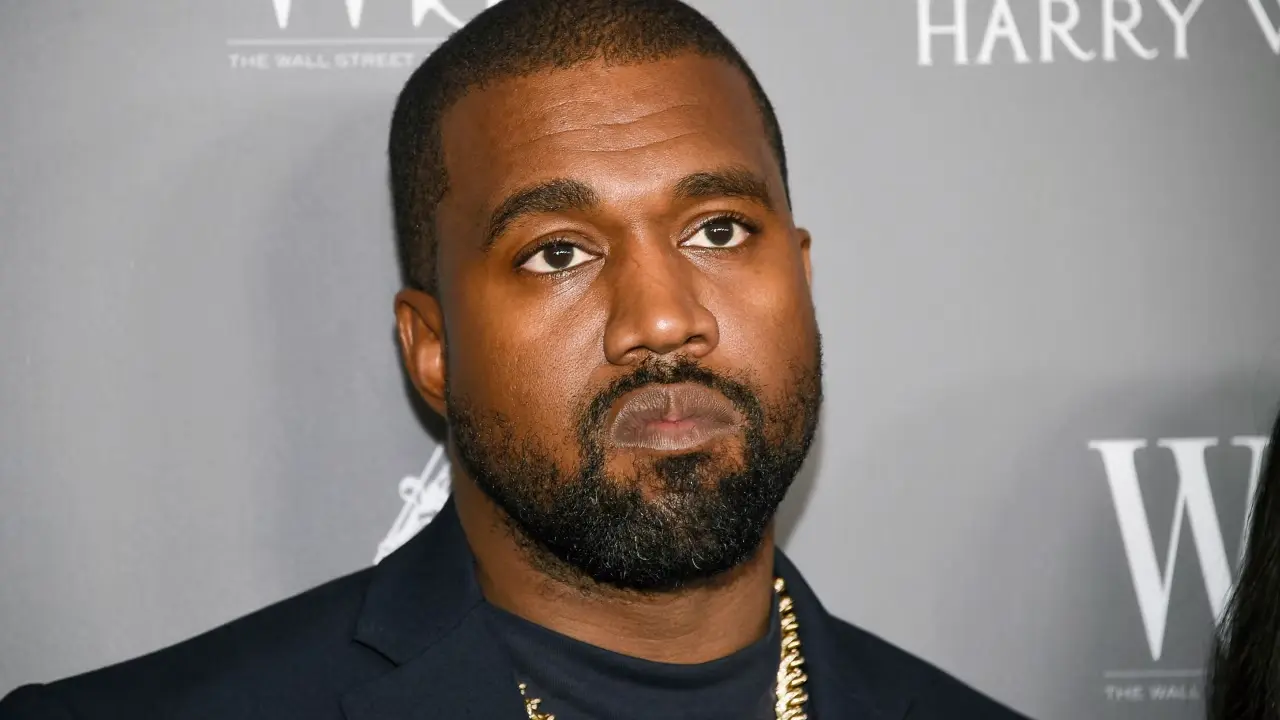
U.K. Home Office Bars Ye From Entry, Forcing Wireless Festival 2026 to Cancel
Home Secretary Shabana Mahmood revokes Kanye West’s Electronic Travel Authorisation on grounds his presence “would not be conducive to the public good” — ending the three-day London festival and triggering automatic refunds for up to 150,000 ticket holders.
On Tuesday, 7 April 2026, the U.K. Home Office withdrew Ye’s (Kanye West’s) Electronic Travel Authorisation (ETA), formally barring him from entering Britain. Organiser Festival Republic — a Live Nation subsidiary — immediately announced the cancellation of Wireless Festival 2026, scheduled for 10–12 July at London’s Finsbury Park. All ticket holders will receive automatic full refunds. The government cited that his presence “would not be conducive to the public good,” a standard legal threshold under the U.K. Immigration Act.
The decision marks an escalation in how sovereign governments are choosing to treat West’s years-long pattern of antisemitic conduct — not as a matter of artistic controversy to be debated in the public square, but as a formal question of public safety answered at the immigration level. That shift, more than the festival cancellation itself, is the story with lasting significance for the live music industry worldwide.
What exactly did the Home Office do, and why?
The U.K. Home Office confirmed in a statement to multiple outlets that West had applied for an Electronic Travel Authorisation “yesterday” — the day before the ban — and that the government then blocked that permission. “The decision was made on the grounds that his presence in the UK would not be conducive to the public good,” an Interior Ministry spokesperson said.
The “conducive to the public good” standard is a discretionary power held by the Home Secretary under U.K. immigration law. It does not require a criminal conviction; it requires only that authorities determine a person’s presence carries a broader social harm. The Campaign Against Antisemitism (CAA) had explicitly called for this power to be invoked, writing publicly that the government “can ban anyone from entering the UK who is not a citizen” on these grounds — and that the case was clear.
“The Government has blocked West’s permission to travel, and he does not hold a valid ETA.”
— U.K. Home Office statement, 7 April 2026How did Wireless Festival respond?
Festival Republic, the Live Nation-owned organiser behind Wireless, announced the cancellation within hours of the Home Office decision. Its statement read in full: “The Home Office has withdrawn Ye’s ETA, denying him entry into the United Kingdom. As a result, Wireless Festival is cancelled and refunds will be issued to all ticket holders.”
The statement notably added that “multiple stakeholders were consulted in advance of booking Ye and no concerns were highlighted at the time” — a line that critics found difficult to accept given West’s extensive and well-documented public record. The statement also acknowledged that “antisemitism in all its forms is abhorrent.”
“Kanye West should never have been invited to headline Wireless. This government stands firmly with the Jewish community, and we will not stop in our fight to confront and defeat the poison of antisemitism.”
— Prime Minister Keir Starmer, posting on X, 7 April 2026What is the timeline of events that led here?
Which sponsors withdrew and why does it matter?
The commercial collapse around the booking was unprecedented in speed. Pepsi, which had been Wireless’s “headline partner” for over a decade, announced its withdrawal in a brief statement confirming the decision but not naming West. Diageo, whose portfolio includes Johnnie Walker, Captain Morgan, Guinness, and Baileys, followed hours later. Rockstar Energy and PayPal pulled back by Monday.
The sponsor exodus matters beyond Wireless. It is the clearest signal yet that major brands will no longer calculate that association with West carries acceptable reputational risk — even in a comeback context and even after a formal public apology.
What did the British Jewish community say?
The Board of Deputies of British Jews president Phil Rosenberg said the community would agree to meet Ye only if he first pulled out of the festival. He stated: “It has been less than a year since Kanye West released a song entitled ‘Heil Hitler,’ the culmination of three years of appalling antisemitism.” The Community Security Trust said the government had made the right decision, adding: “Anti-Jewish hatred should have no place in society.”
The Campaign Against Antisemitism accused Festival Republic’s Melvin Benn of “profiteering from racism.” A dispute also emerged over Festival Republic’s claim it had tried to reach Jewish groups before the booking; the Board of Deputies publicly contradicted this, stating neither it nor the Jewish Leadership Council had “refused any request to meet.”
What has Ye said publicly?
Hours before the ban was confirmed, West issued his first public statement on the controversy, writing: “I’ve been following the conversation around Wireless and I want to address it directly. My only goal is to come to London and present a show of change, bringing unity, peace, and love through my music.” He said he would be “grateful for the opportunity to meet with members of the Jewish community in the U.K. in person, to listen,” and added: “I know words aren’t enough — I’ve have to show change through my actions.”
The statement came too late to prevent the Home Office decision. Earlier this year, West had said he was misdiagnosed with bipolar disorder and believes he is autistic, complicating his earlier apology which had cited bipolar-related manic episodes as context for his conduct.
What does this mean for West’s comeback attempt — and for the live industry?
The SoFi Stadium dates (April 4–5) were pointedly promoted by West as proof of his rehabilitation — “They said I’d never be back in the States. Two sold-out concerts, baby!” The U.K. ban arrives less than 72 hours later and is categorically different in nature. American promoters made a commercial calculation; a sovereign government made a legal one.
That legal precedent — the “not conducive to the public good” bar applied over antisemitic expression rather than criminal conduct — is the detail festival bookers, agents, and live-industry insurers worldwide will be studying. It is the first time a major Western government has invoked an immigration bar against a mainstream pop artist specifically on hate-speech grounds without an accompanying criminal charge.
For Wireless specifically, the financial consequences are severe. Losing four headline sponsors and the entire gate revenue of a 150,000-capacity, three-day festival — on a booking Festival Republic chose to defend publicly until the very end — is a reputational and commercial wound that will take years to fully assess.
What happens to ticket holders?
- Refunds are automatic — ticket holders do not need to request them.
- Festival Republic confirmed all purchases will be returned in full.
- The Wireless website replaced its homepage with the cancellation statement.
- Live Nation has not issued a separate statement as of publication.
Key facts at a glance
- Wireless Festival founded 2005; held annually at Finsbury Park, North London.
- Draws up to 150,000 attendees; past headliners include Drake, Nicki Minaj, and 21 Savage.
- West last performed in the U.K. at Glastonbury 2015.
- West has 24 Grammy Awards; his Adidas/Yeezy partnership was terminated in October 2022 following antisemitic statements.
- Australia denied West a visa in 2025 — the U.K. is now the second country to do so.
- Home Secretary Shabana Mahmood made the decision; Health Secretary Wes Streeting was among the most vocal government critics.
Lewis Calvert Founder & Editor, BriefLedger
Lewis founded BriefLedger and has six years of experience covering film, TV, and entertainment news. He leads the site’s Movies and TV sections and runs the news desk — always with a straight-talking British take.