The real history behind anime’s most iconic katanas
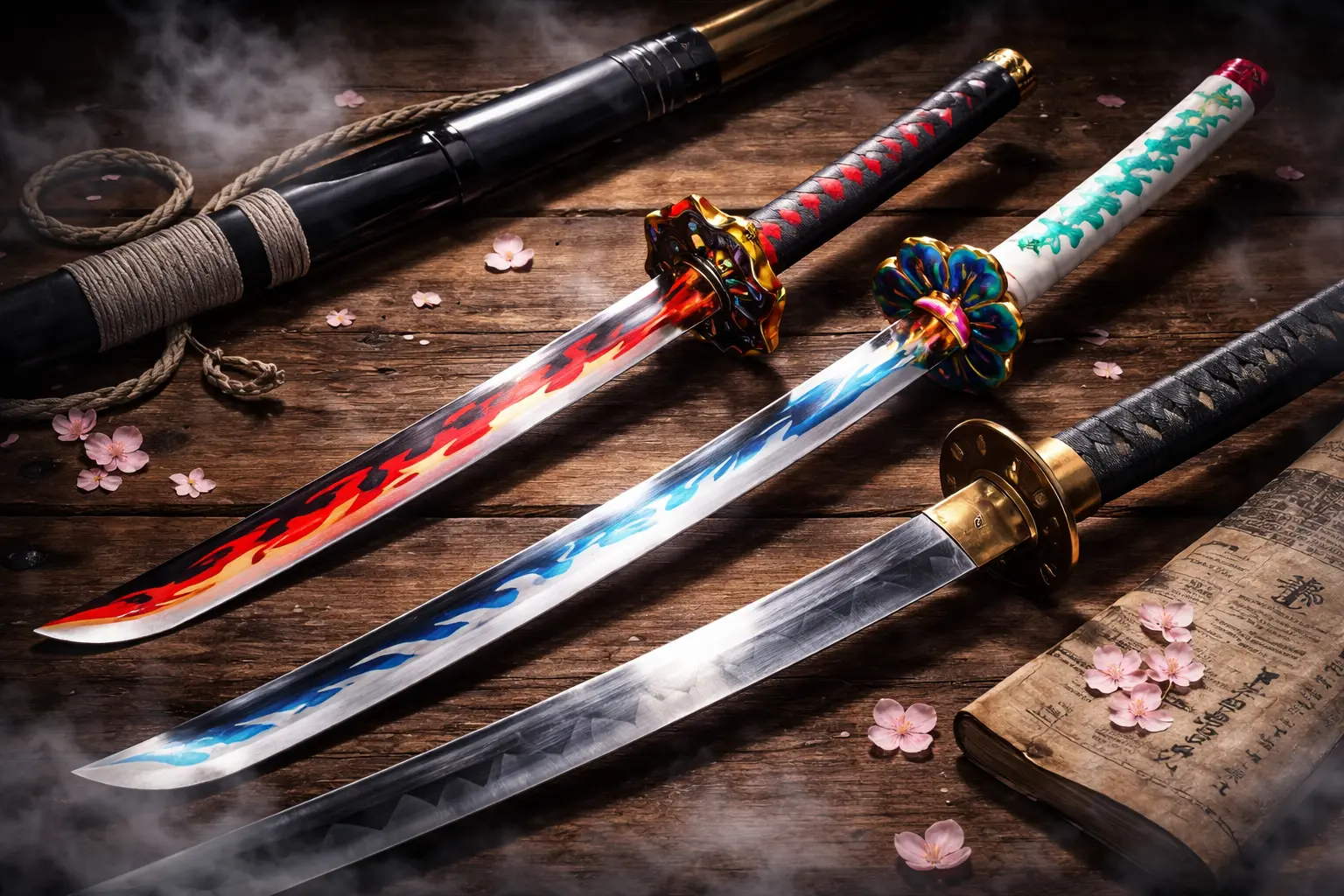
The katana has inspired anime’s most beloved fictional blades — from Bleach’s Zangetsu to Demon Slayer’s Nichirin swords — but the real steel behind those designs spans over a thousand years of Japanese metallurgy, Shinto ritual, and samurai culture.
- Anime’s iconic swords are rooted in real feudal Japanese katana-making traditions dating back to the Heian period (794–1185).
- Traditional blades use tamahagane — “jewel steel” — produced in a clay furnace called a tatara over several days using iron sand.
- Demon Slayer’s Nichirin blades and Bleach’s zanpakutō both draw on historical ideas of swords as spiritual extensions of their wielders.
- UK fans can explore the real history at the Wallace Collection in London, which holds one of Europe’s finest samurai sword exhibitions.
From feudal forge to animated frame
Before Tite Kubo drew Ichigo’s oversized cleaver or Koyoharu Gotouge designed colour-shifting Nichirin blades, a far older tradition shaped what the katana meant — and still means — in Japanese culture.
According to Battle-Merchant, the katana emerged during the Heian period and became the defining weapon of the samurai class. It was never merely a tool of war. The art of swordsmithing was treated as a spiritual discipline, with forges regarded as sacred spaces where iron met fire in rituals tied to Shinto practice.

That spiritual dimension is precisely what anime creators kept. In series after series, a character’s blade mirrors their inner world — their heritage, their grief, their purpose. The history is not just backdrop; it is the source code.
Tamahagane: the “jewel steel” at the heart of every blade
The word sounds like something from a fantasy serial. In reality it is the foundation of every real Japanese sword — and the direct ancestor of the fictional ores that power Demon Slayer’s Nichirin blades.
According to The Sword Stall, tamahagane — combining tama (precious or jewel) and hagane (steel) — is produced by heating iron sand, known as satetsu, in a clay furnace called a tatara. The process runs for several days and results in steel with varying carbon content, giving the finished blade a unique combination of hardness and flexibility.
That dual property — hard enough to hold a razor edge, flexible enough not to shatter — is what PBS Nova describes as the katana’s engineering marvel. Two different grades of steel are folded and laminated together in a process that takes months under a single swordsmith.
“Swordsmiths treated the forge as a sacred space, where elements like iron and carbon met fire and water in a harmonious dance.”
The parallels with Demon Slayer are striking. According to Sword Slice, the series’ Nichirin blades are forged from Scarlet Crimson Iron Sand and Scarlet Ore sourced from mountain peaks perpetually exposed to sunlight. The fictional ore absorbs solar energy the way real tamahagane absorbs and retains its smelting fire — a clear mythological translation of actual metallurgical tradition into supernatural narrative.
Zangetsu (Bleach): the sword as soul
Zangetsu — Bleach
In Japanese, Zangetsu translates to “Slaying Moon” or “Cutting Moon.” The blade begins as a massive cleaver and transforms through Ichigo’s growth — a direct narrative metaphor for the samurai ideal that the sword reflects its owner’s character.
In feudal Japan, a samurai’s katana was considered an extension of the warrior himself. According to Battle-Merchant, swords in Japanese culture symbolise honour, power, and spiritual connection — and those values feed directly into how Bleach presents its zanpakutō system, where each Soul Reaper’s blade has its own name, personality, and inner world.
According to CoolKatana, Zangetsu’s simple yet striking design — a long black blade with a cloth-wrapped hilt — has become one of the most recognisable swords in anime history. Its evolution from the cleaver-like shikai to the sleeker Tensa Zangetsu in Bankai maps directly onto how real swordsmiths refined the katana across generations: functionality evolves, but the soul of the blade remains constant.
Tessaiga (InuYasha): inheritance forged in fang
Tessaiga — InuYasha
Forged from the fang of Inuyasha’s father, the Tessaiga draws on real traditions of Japanese swords being passed from parent to child — objects of heritage as much as weapons of war.
Historically, a samurai’s katana could pass through multiple generations. Renowned blades were recorded, named, and treated as clan treasures. According to Nerdbot, the Tessaiga represents inheritance, protection, and the bond between parent and child — themes drawn directly from the cultural weight real katanas carried in feudal Japan.
The sword’s transformation from battered appearance to powerful weapon also mirrors a real aspect of Japanese sword culture: a blade’s value was not always visible in its surface. Many famous historical katanas wore plain mounts while carrying extraordinary provenance and craftsmanship within their steel.
Nichirin blades (Demon Slayer): mythology meets metallurgy
Nichirin blades — Demon Slayer: Kimetsu no Yaiba
Forged from ore saturated with sunlight, the Nichirin system is Demon Slayer’s most elaborate nod to Japanese sword tradition. The blades connect character, craft, and cosmology in a way that directly echoes how real katanas were understood by the samurai who carried them.
According to the Demon Slayer Wiki, Nichirin swords are the only weapons capable of killing demons because the ore from which they are forged — harvested from high mountain peaks exposed to perpetual sunlight — absorbs solar energy at a molecular level. The word nichirin itself combines kanji for “sun” and “blade,” while the scarlet ore’s name references hihi’irokane, a legendary metal from Japanese mythology said to blaze like the sun.
According to Anime Katana, while Nichirin blades are fictional, their designs are heavily inspired by real Japanese swords — especially the traditional katana used by historical samurai. The swordsmith village seen in the series’ later arcs also has real precedent: in feudal Japan, blade-making communities were clustered geographically, with specific regions developing distinct forge traditions passed down through strict guilds.
Wado Ichimonji (One Piece): the promise within the blade
Wado Ichimonji — One Piece
One of 21 Great Grade swords in the One Piece world, Wado Ichimonji echoes the real historical practice of naming and grading Japanese blades by prestige — a tradition that produced sword catalogues dating back centuries.
In feudal Japan, the value of a katana was assessed through a formal grading system. According to SwordsSwords, Wado Ichimonji is one of the most recognisable blades in One Piece, prized for its durability and the emotional significance it carries for Roronoa Zoro — both qualities that resonate directly with how real prized katanas were regarded by their samurai owners: not as interchangeable tools but as irreplaceable companions bound to their bearer’s identity.
Where UK fans can experience the real thing
The Wallace Collection in London holds one of Europe’s finest collections of Japanese arms and armour, including authenticated Edo-period katanas. Admission is free. The Royal Armouries in Leeds — one of the world’s oldest museums dedicated to arms — also displays significant Japanese sword holdings and offers educational resources on historical blade-making. Both collections allow UK fans to stand before the real steel that inspired anime’s greatest fictional blades.
UK streaming platform Crunchyroll carries all three series — Bleach, InuYasha, and Demon Slayer — in their complete runs. Demon Slayer: Kimetsu no Yaiba is rated BBFC 15 in the UK, reflecting its intense combat sequences and themes.
The Meiji era nearly killed the tradition — and why anime kept it alive
The same cultural transmission that runs from feudal Japan through anime’s fictional swords nearly broke in the 19th century. According to Katana America, the Meiji Restoration of 1868 nearly eliminated authentic tamahagane production as modern steel manufacturing offered efficiency that traditional methods could not match. Dedicated artisans preserved the knowledge, recognising its cultural significance beyond utility.
Anime became part of that preservation. By centring blade culture in globally watched series, creators like Koyoharu Gotouge gave millions of viewers outside Japan their first encounter with tamahagane, tatara furnaces, and the idea that a sword could be a spiritual object. The fictional and the historical are not opposites — they are collaborators in keeping a living tradition visible.
Today, only a handful of licensed swordsmiths in Japan are permitted to forge authentic katanas using traditional methods. The blades they produce are classified as works of art under Japanese law, not weapons. The distance between Tanjiro Kamado’s colour-changing Nichirin sword and a real tamahagane blade measured under a craftsman’s hand is less than a millennium of unbroken tradition.
More on Screen & Story: Read our coverage of Mortal Kombat 2 and the Harry Potter TV series season 2 renewal — two more franchises where real mythology meets modern storytelling.

Elena Vane is an award-winning comics historian and pop culture journalist. Specializing in the DC/Marvel universes and independent graphic novels, Elena has been documenting the rise of cosplay culture for over a decade . She is a frequent panelist at New York Comic Con and provides in-depth biographies of industry pioneers. Elena’s expertise ensures that every comic-related update is factually grounded and community-focused .