No, AI should not be winning film awards. Ever.
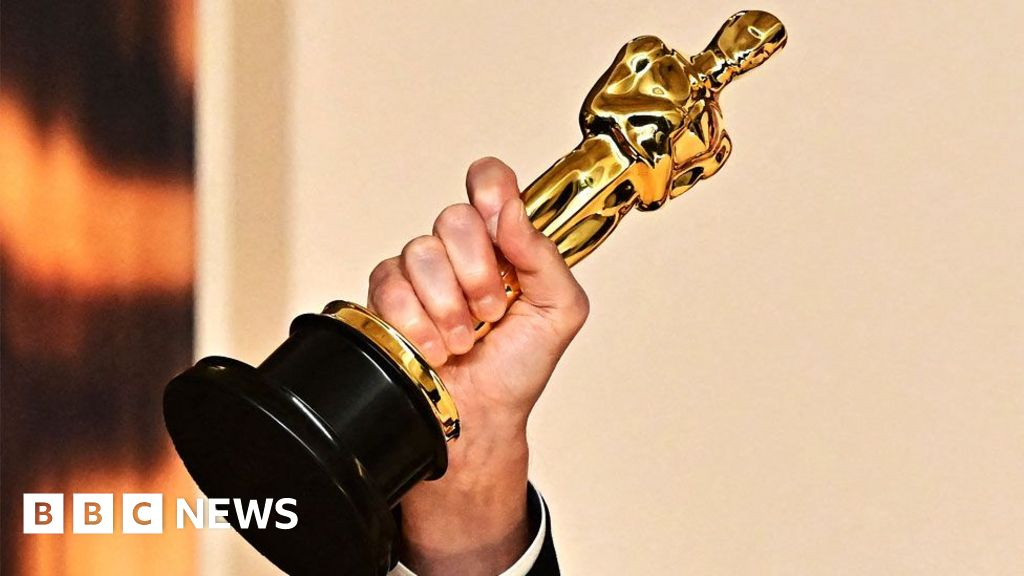
The Oscars have banned AI actors from winning. BAFTA just went the other way. That split, arriving in the same summer, is exactly why the industry needs one firm rule, not two.
TL;DR
- The Academy’s 99th Oscars rules exclude AI-generated performances and non-human-authored scripts from competitive categories.
- BAFTA’s newly updated 2027 rulebook keeps AI-assisted films eligible, judged case by case on “human creative involvement.”
- The 80th EE BAFTA Film Awards take place on Sunday, 21 February 2027, in London — a ceremony now operating under a looser AI standard than its American counterpart.
- Awards exist to honour a specific kind of labour. A generated performance, however convincing, isn’t that labour.
Two academies, two answers
Generative tools are already inside mainstream filmmaking, from de-aging to voice work to background plates. Nobody serious is arguing to ban software from a cutting room. That’s not the debate.
The debate is narrower and sharper: should a performance, a screenplay, or a visual creation that a machine produced be allowed to win. According to TechCrunch, the Academy of Motion Picture Arts and Sciences settled that question for its own awards this spring: only performances credited in a film’s legal billing and demonstrably performed by humans with their consent are eligible, and screenplays must be human-authored.
Lynette Howell Taylor, the Academy’s president, put the underlying principle plainly: humans have to be at the centre of the creative process, according to Euronews.
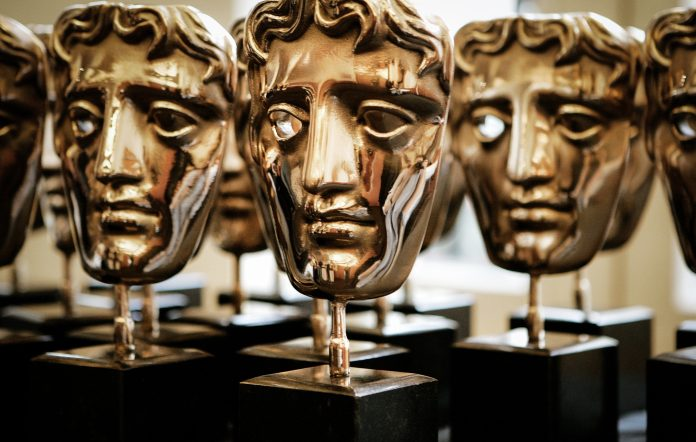
BAFTA has not followed. Its updated rulebook, confirmed this week, states that its awards recognise “outstanding human achievement… regardless of the tools used to bring this work to life,” and that generative AI use will only trigger extra scrutiny where it’s “relevant to the consideration of the work,” according to Variety. Emma Baehr, BAFTA’s executive director of awards and content, told The Hollywood Reporter the goal was simply the option to “dig in a bit deeper” on a case-by-case basis, not a blanket restriction.
Two of the industry’s most influential bodies now hold opposite positions on the same question, months apart.
Why the Oscars got it right
An award is not a technology prize. It is not there to reward the most convincing output; it’s there to reward a person’s judgment, control, and craft under constraint. That’s the whole premise of a Best Actor statuette — not “this face moved convincingly,” but “this performer made specific choices that worked.”
An AI system does not make choices in that sense. It samples a distribution. Give it the same prompt twice and you get two different outputs; the “performance” is not authored by anyone in the room, and there is no consistent creative will behind it that a jury can actually evaluate.
That’s the flaw in BAFTA’s “case-by-case, judged on human involvement” approach. It sounds reasonable, but it quietly assumes there’s a clean way to measure how much of a generated performance is “human.” There isn’t. Once a tool can generate the output, provenance becomes a paperwork exercise, not a creative one.
Stat card Oscar eligibility rule change: Screenplays must now be human-authored; AI-generated performances excluded from competitive categories. Source: TechCrunch, May 2026
The Tilly Norwood problem
This isn’t hypothetical anymore. The rise of synthetic performers such as Tilly Norwood — and the prospect of a posthumous, AI-recreated performance from Val Kilmer in an upcoming film — forced both academies to actually write rules instead of issuing statements, according to reporting from Variety and The Hollywood Reporter.
BAFTA has confirmed Norwood herself will never be eligible for a BAFTA Film Award. But that’s a narrower promise than it sounds: it rules out one synthetic personality winning, while leaving the door open to AI-assisted work by human-credited actors, exactly the grey zone that made “The Brutalist” and “Emilia Pérez” controversial during the 2025 awards season.
Stat card 80th EE BAFTA Film Awards: Sunday, 21 February 2027, London. Source: Deadline, July 2026
“It’s just a tool” isn’t a defence here
The strongest pushback against a hard line is that cameras, CGI, and motion capture were once new too, and nobody bans a lens. That’s true, and it’s also beside the point. A camera doesn’t generate a performance; it records one that a human being still had to give, take after take, on set, under direction. Generative AI collapses that step. It doesn’t extend a performer’s control — it can replace the need for a performer’s control entirely.
If awards bodies start rewarding output regardless of whether a human was making moment-to-moment creative decisions, the award stops measuring craft and starts measuring whichever studio has the best model licence. That’s not a small drift. It changes what the trophy means.
Where this leaves the debate
None of this settles cleanly, and it’s worth saying plainly that reasonable people in the industry disagree. Some argue BAFTA’s flexible standard is more honest about how filmmaking actually works now, since nearly every mainstream production already uses some generative tool somewhere in the pipeline, and a blanket ban risks punishing films for incidental use rather than wholesale synthetic authorship. Others worry that even the Academy’s rule is more symbolic than enforceable, since it relies on self-disclosure with no independent verification of how a performance or script was actually produced.
What’s clear is that the gap between the Oscars and BAFTA won’t last. One of these standards is going to end up as the industry default, and studios submitting to both bodies will start building productions around whichever rule is easier to satisfy. That’s not a reason to loosen the line. It’s a reason to draw it clearly, now, before the technology makes the question moot by default.
Reported from publicly available interviews and verified press sources. Last reviewed July 23, 2026.

Lewis Calvert Founder & Editor, BriefLedger
Lewis founded BriefLedger and has six years of experience covering film, TV, and entertainment news. He leads the site’s Movies and TV sections and runs the news desk — always with a straight-talking British take.