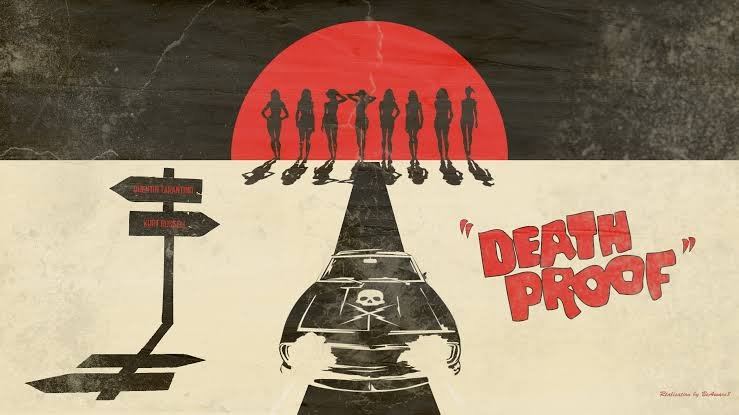
Death Proof (2007) Review: A Grindhouse Homage Built on Real Metal
Tarantino’s practical-stunt grindhouse homage thrills on the road, but its talk outstays its welcome.
UK Platform/Release: UK cinemas, 21 September 2007; available to rent or buy digitally | BBFC Rating: BBFC 18 | Runtime/Episodes: 113 minutes
Scorecard & Industry Consensus
OUR RATING: ★ ★ ★ ★ ☆ (7.5 / 10)
Verdict: Stylish, uneven, rewardingly practical
| Category | Score | Key Takeaway |
|---|---|---|
| Story & Narrative Realism | 3.0/5.0 | A compelling stuntman-as-stalker premise is undermined by a killer whose motive is never explained. |
| Performances & Chemistry | 4.0/5.0 | Kurt Russell is menacing as Stuntman Mike, and the female ensemble gives the extended conversations real life. |
| Production & Set Pieces | 4.5/5.0 | Entirely practical, CGI-free car stunts give the action a physical authenticity that is increasingly rare. |
| Pacing & Tension | 3.0/5.0 | Long dialogue passages deepen character but inflate the running time well beyond what the story needs. |
| Sound Design & Score | 4.0/5.0 | The audio supports the film’s gritty, retro exploitation texture without overwhelming the stunt work. |
Industry Consensus (Reference Only):
- Rotten Tomatoes: 66% (Critics)
- IMDb: 7.0 / 10
- Metacritic: 77 / 100
Quick Audience Guide
| Watch It If | Skip It If |
|---|---|
| You admire Quentin Tarantino’s distinctive filmmaking style, or you want action built on genuine, CGI-free car stunts. | You expect a conventional horror film, or you have little patience for long, dialogue-heavy build-ups. |
The Standout Moment: The Tennessee chapter, where Mike finally confronts experienced stuntwomen, is the film’s best stretch: fully practical, CGI-free car stunts that make every collision feel tangible and thrilling.
High-Impact Pros & Cons
Pros
- Practical Stunts: Every car stunt is performed for real, without CGI, giving the action a tangible danger digital spectacle rarely matches.
- Unmistakable Tarantino: Long, character-driven conversations and a distinctive directorial voice make this unmistakably Tarantino, rewarding admirers of his singular filmmaking style.
- Strong Characterisation: Extended dialogue exchanges between the women deepen character development, giving the audience a genuine stake before the danger arrives.
- Engaging Second Half: The Tennessee chapter, pitting Mike against experienced stuntwomen, is highly entertaining and shifts the film’s dynamic in welcome fashion.
Cons
- Bloated Dialogue: The lengthy conversations that build character also inflate the running time unnecessarily, which tests the viewer’s patience.
- Unexplained Motive: Mike’s reason for murdering these women is never explained, leaving the antagonist’s menace without the psychological grounding viewers might expect.
Deep Editorial Critique
Direction & Tactical Realism
Quentin Tarantino’s filmmaking is defined by reinvention, and Death Proof continues that pattern. It was his fifth film by his own count, made when he was already saying he would retire after ten. With only one film now remaining, each of his releases feels like an event for his admirers. For me, his most recent, Once Upon a Time in Hollywood, remains a personal favourite, and its legacy is still growing, as our report on Brad Pitt’s return as Cliff Booth in the first full trailer for Fincher’s Tarantino sequel shows. Death Proof is a very different proposition.
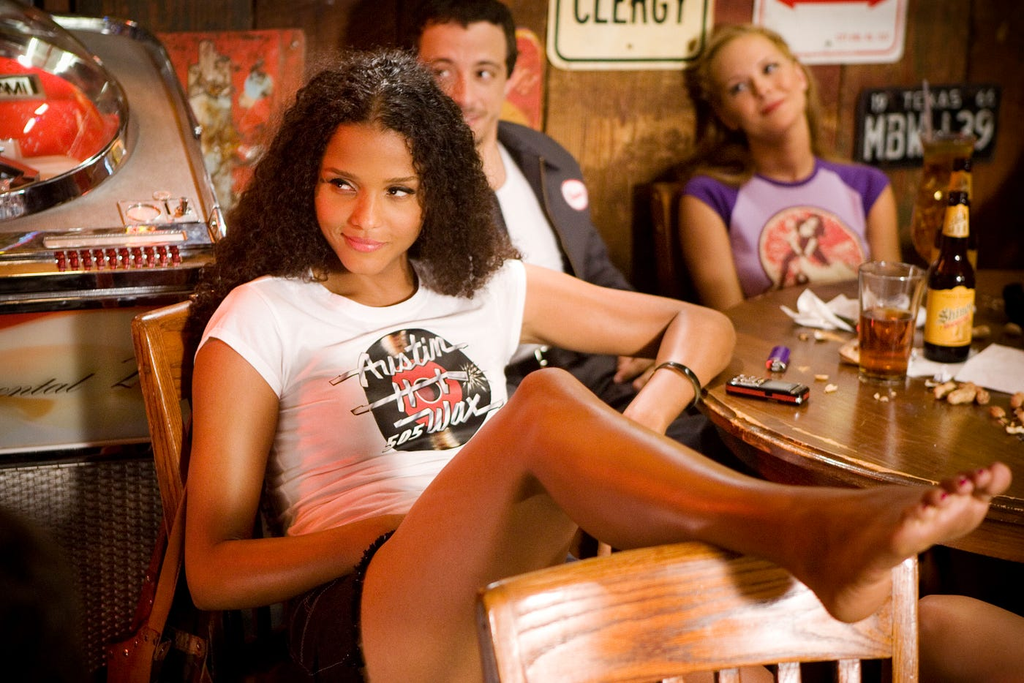
The story centres on Stuntman Mike (Kurt Russell), who has made his car “death-proof”. He believes no driver can die in it, however reckless the stunt. His problem is that he does more than perform dangerous stunts. He stalks young women around town and uses the car to kill them. The film presents two such hunts. In Austin, Texas, he succeeds. In Tennessee, he meets experienced stuntwomen, and what follows is hugely entertaining.
It was marketed as horror, but I would argue it is not. There are unsettling moments, yet the film sits far more comfortably as an action picture. Its weakness is narrative. Tarantino’s trademark extended conversations build the characters well but swell the film to nearly two hours, and the one question that matters, why Mike kills, goes unanswered.
Production Scale & Visual Impact
The film’s defining achievement is practical. There is no CGI. Every car stunt was performed for real, and the physical reality shows on screen. It recalls the stunt-driven filmmaking of Vanishing Point (1971), another picture that relied on genuine car work rather than digital trickery. That commitment still resonates today, as the record-breaking practical stunts teased for Spider-Man: Brand New Day demonstrate. In an era of effects-heavy action, the tactile danger here feels almost radical. The retro, exploitation-era texture is part of the design, a sensibility also at play in the rotoscoped animated reimagining of Tobe Hooper’s Texas Chain Saw Massacre. The audio supports it without competing with the stunts.
Performances & Tension
Kurt Russell, a familiar presence in Tarantino’s orbit, makes Stuntman Mike genuinely unsettling. The cast of women carries the film’s long conversations with chemistry that makes the scenes engaging rather than static. Tension is the uneven element. The build-up between the two hunts is patient to a fault, but the Tennessee chapter repays that patience with a more kinetic payoff.
The film’s commercial fate is worth recording. It was originally released alongside Robert Rodriguez’s Planet Terror as the Grindhouse double bill, so audiences could not see it on its own. That experiment failed commercially, and Tarantino himself later described it as among his least-liked works. Critically it fared better than at the box office, and I would still recommend it to his admirers. Fans of his style should treat it as a must-watch. Action enthusiasts who want entirely real stunts should give it a one-time watch.

Rachel Rosie is a Writer & Editor at BriefLedger, based in London, UK. She holds a BA (Hons) in Journalism and Publishing from the University of the Arts London (UAL). Rachel writes about entertainment, culture, television, movies and trending stories, with a focus on clear, engaging and well-researched content.